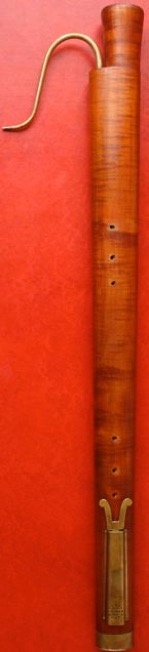
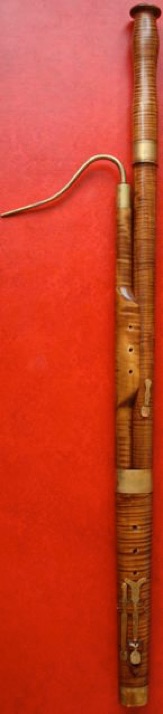
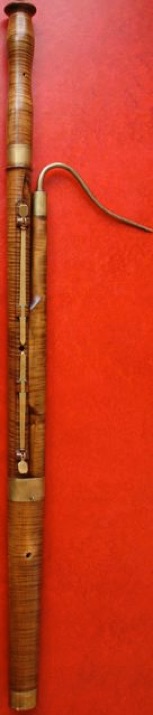
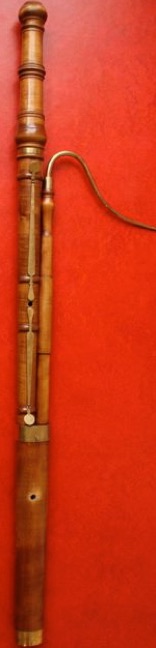
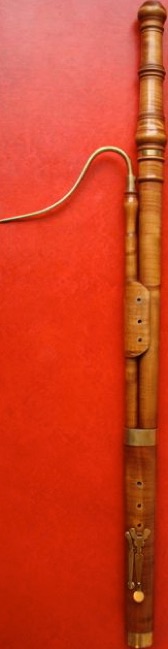
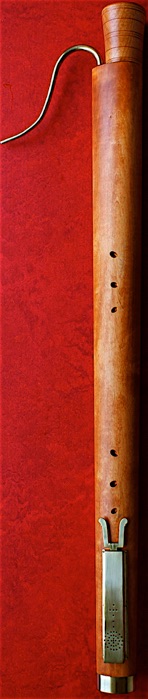
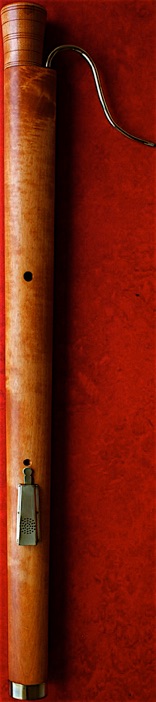
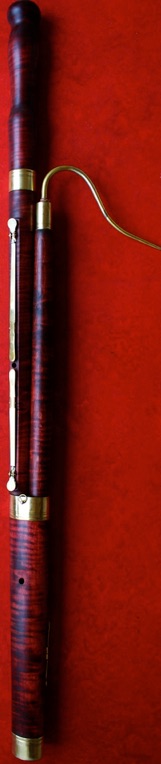
Five-key bassoon after JF Grundmann (1729-1800) by Mathew Dart.
The original of this bassoon is dated 1792 and was owned by the late William Waterhouse. It is a classic Dresden-style bassoon of the kind Mozart knew.
This is a wonderful instrument on which to play Mozart.
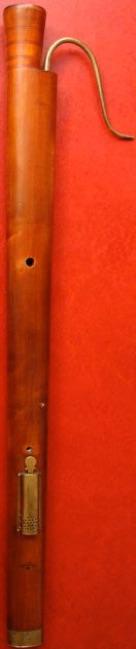
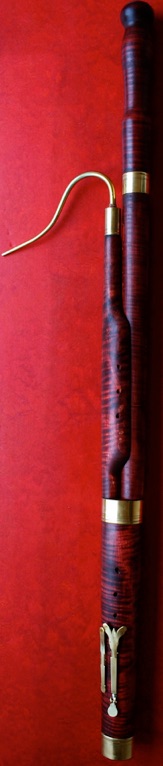
Four-key bassoon after JC Denner (1655-1707) by Mathew Dart.
The original of this instrument has three keys but the fourth key (g-sharp) added to this copy is not out of keeping with the period. Having said that, I play this instrument as a three-key bassoon for seventeenth century repertoire by removing the g-sharp key and plugging the hole with beeswax.
The original of this bassoon is in the instrument museum at the Royal Conservatorium in Brussels. It is unlike other extant bassoons stamped ‘JC Denner’ in several ways. I have often wondered why this is. Perhaps it was made by one of the younger makers in the Denner workshop using the JC Denner stamp or perhaps it could be a fake! Fakes are not unknown in historical instrument collections. Hopefully somebody will investigate this more fully in the future.
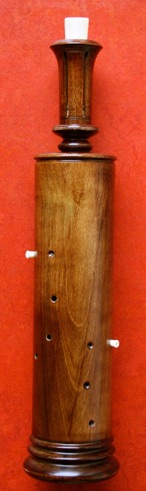
Bass curtal based on several originals ca. 1600 (mainly those in the Berlin and Brussels instrument museums) by G & M Lyndon-Jones.
Musicologist and renaissance wind player Keith McGowan once pointed out that although most people know this instrument by an anglicised version of its German name - dulcian, from Dulzian - it does in fact have a native English name - the curtal. Good point, Keith.
My instruments
We would all love more instruments in our collections. I get by with just three bassoons and my indulgence, a great bass rackett.
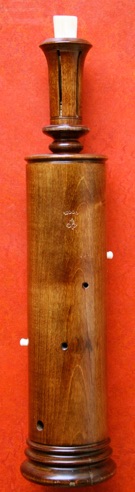
Great bass renaissance rackett by Wood.
Only three original renaissance racketts survive, all made of ivory. Racketts sound surprisingly deep for their size. This instrument is less than 40cm tall yet its bottom note is the very lowest C on the piano keyboard! Its narrow, cylindrical bore is nearly 3m in length, folded nine times within the body of the instrument.